| Face and Body Cavitation |
|
Wednesday, October 7, 2015
LIPOSLIM

Friday, September 11, 2015
What is your Color?
Color is everything! And it is everywhere! Just look around you. All these great diversity of colors is creating a life that is more meaningful and engaging. Nature itself has devised ways in manipulating these adorations in ways that suites any given purpose. We humans are not exempted on this color variation. And nothing is more pronounced than the color that is endowed to us by our skin.
|
Our skin has its own natural way of showing off. On a large part, our skin’s color is mainly due to the pigment melanin. Melanin is manufactured by the melanocytes, cells that are found among the basal cells of the epidermis.
|
If you are thinking that a white man is very different from the black, the answer is no. It is exciting to know that the number of melanocytes found in every human is almost the same regardless of race. The defining factor is whether how much melanin is produced and the number of pigment granules.
|
Aside from giving us our color, melanin also has its own protective function. It protects us from the harmful ultraviolet rays because melanin granules tend to move about the cell’s nucleus and form a shroud over it. If you are “itching” for some tan on the sun, all of us knew that exposure on a given amount of time darkens our skin. In this scene, the melanocytes does not increase in number but because the amount of melanin produced is increased. No wonder, so many white Caucasians are extremely addicted in this activity. But there is warning though, never stay too long under the sun and when the sun is really hot better do something else.
|
So, be proud of your color! And do not judge anyone rather. Remember, the value of a person is not measured on looks but it is measured on what he or she can do. Like the melanocytes, it’s the amount of activity that counts.
|
Living with the Dead
| |||||||||||||||
ACNE
Acne vulgaris (commonly called ACNE, ZITS, SPOTS, BLEMISHES, PIMPLES, PUNGGOD IN BACOLOD & ILOILO, BUGAS-BUGAS IN BOHOL & DUMAGUETE) is a common skin condition, caused by changes in the pilosebaceous units, skin structures consisting of a hair follicle and its associated sebaceous gland via androgen stimulation. It is characterized by non-inflammatory follicular papules or comedones and by inflammatory papules, pustules, and nodules in its more severe forms. Acne vulgaris affects the areas of skin with the densest population ofsebaceous follicles; these areas include the face, the upper part of the chest, and the back. Severe acne is inflammatory, but acne can also manifest in non-inflammatory forms.
Acne is most common during adolescence and frequently continues into adulthood. The cause in adolescence is generally an increase in male sex hormones, which people of both genders acquire during puberty. For most people, acne diminishes over time and tends to disappear—or at the very least decrease—after one reaches one's early twenties. There is, however, no way to predict how long it will take to disappear entirely, and some individuals will carry this condition well into their thirties, forties and beyond.
The face and upper neck are the most commonly affected, but the chest, back and shoulders may have acne as well.
Causes of Acne
Acne develops as a result of blockages in follicles. The bacteria Propionibacteriumacnes can cause inflammation, leading to inflammatory lesions (papules, infected pustules, or nodules) in the skin, which results in redness and may result in scarring or hyper-pigmentation.
Treatments
There are many products available for the treatment of acne. Treatments show little improvement within the first two weeks, instead taking a period of approximately three months to improve and start flattening out.
A combination of treatments can greatly reduce the amount and severity of acne in many cases. Those treatments that are most effective tend to have greater potential for side effects and need a greater degree of monitoring, so a step-wise approach is often taken.
There are a number of treatments that have been proven effective:
Topical Bactericidals
Widely available OTC bactericidal products containing benzoyl peroxide may be used in mild to moderate acne. The gel or cream containing benzoyl peroxide is rubbed, twice daily, into the pores over the affected region. Bar soaps or washes may also be used and vary from 2 to 10% in strength. In addition to its therapeutic effect as a keratolytic (a chemical that dissolves the keratin plugging the pores) benzoyl peroxide also prevents new lesions by killing P. acnes. Unlike antibiotics, benzoyl peroxide has the advantage of being a strong oxidizer (essentially a mild bleach) and thus does not appear to generate bacterial resistance. However, it routinely causes dryness, local irritation and redness.
Care must be taken when using benzoyl peroxide, as it can very easily bleach any fabric or hair it comes in contact with.Topical Antibiotics
Externally applied antibiotics such as erythromycin, clindamycin, stievamycin, or tetracycline kill the bacteria that are harbored in the blocked follicles. While topical use of antibiotics is equally as effective as oral use, this method avoids possible side effects including upset stomach and drug interactions.
Oral Antibiotics
Oral antibiotics used to treat acne include erythromycin or one of the tetracyclineantibiotics (tetracycline, the better absorbed oxytetracycline, or doxycycline, minocycline, or lymecycline). Trimethoprim is also sometimes used. However, reducing the P. acnes bacteria will not, in itself, do anything to reduce the oil secretion and abnormal cell behavior that is the initial cause of the blocked follicles. It has been found that antibiotics such as minocycline also improve acne. It is believed that minocycline's anti-inflammatory effect also prevents acne.
Hormonal Treatments
In females, acne can be improved with hormonal treatments. If a pimple is large and/or does not seem to be affected by other treatments, a dermatologist may administer an injection of cortisone directly into it, which will usually reduce redness and inflammation almost immediately. This has the effect of flattening the pimple, thereby making it easier to cover up with makeup, and can also aid in the healing process. Side effects are minimal, but may include a temporary whitening of the skin around the injection point; and occasionally a small depression forms, which may persist, although often fills eventually.
Topical Retinoids
A group of medications for normalizing the follicle cell lifecycle are topical retinoidssuch as tretinoin (brand name Retin-A), adapalene (brand name Differin), andtazarotene (brand name Tazorac). Like isotretinoin, they are related to vitamin A, but they are administered as topicals and generally have much milder side effects. Topical retinoids often cause an initial flare up of acne and facial flushing.
The Skin
The body is a magnificent piece of workmanship indeed. Different parts perform functions that are vital to its survival and one of them is our skin. The skin is our largest organ. As you can see it runs from head to toe. It serves different functions such as regulating body temperature, maintaining water and electrolyte balance, and sensing painful and pleasant stimuli. So, before you go to your favorite derma clinic I think it is a better idea to know a few facts about your skin.
|
As you can see, you don’t have to become a dermatologist to understand a few medical terms. The skin is not just a thin piece of flesh that covers us. It is as complex as any body part. It has three layers namely:
|
|
The Epidermis is the relatively thin, tough layer of the skin. Ever wonder how we shed our skin? Most of the cells in our epidermis are keratinocytes. They came from the Basal Layer, the deepest layer of the epidermis. Those keratinocytes gradually make their way up towards the surface of the skin. Upon reaching the surface they eventually shed giving way to younger cells from below.
|
Now, peeking inside epidermis, you may find out other parts. One of them is stratum corneum. When taking a dive into your backyard pool you don’t damage anything inside your body. Why? It is because of stratum corneum, it is the outermost portion of the epidermis, relatively water proof and prevents most bacteria, viruses and other foreign substances from entering your body.
|
What is the color of your skin? White, black or brown? If you love your skin color, you would like to say thank you to your melanocytes. Melanocytes produces the pigment could melanin and it is one of the main contributors of your skin color. Aside from color, it also has another important function; it protects you from the harmful rays of the sun.
|
Dermis is the next layer in our list. It is a thick layer of fibrous and elastic tissue that gives flexibility and strength to our skin. It contains nerve endings, sweat glands and oil glands, hair follicles and blood vessels.
The Sweat Glands produce sweat in response to heat and stress. Sebaceous Glands secrete sebum, an oil that keeps the skin moist and soft, into our hair follicles. Hair Follicles produce the various types of hair found throughout the body.Blood Vessels provide nutrients to our skin and also regulate body temperature (like the radiator inside your auto). And Nerve Endings that is responsible in saying “Hey! Look at me I am hurt!” |
Is Fat a good thing or not? That depends on how it functions. If you are looking into the third layer of the skin that serves as an insulator from the outside world (protects you from extreme hotness or coldness), serves as a protective padding and as an energy storage area. Then, that is a good thing.
|
The skin is our first line of defense, the organic radiator and our “First Impressions Lasts…” body part. Just like anything else if you want your skin to serve you well you must take good care for it. If you want to be beautiful and healthy, start with your skin, because nothing beats Natural Beauty. If you do not believe me, just ask your friendly neighborhood dermatologist. Now, I think you are ready to visit your derma clinic.
|
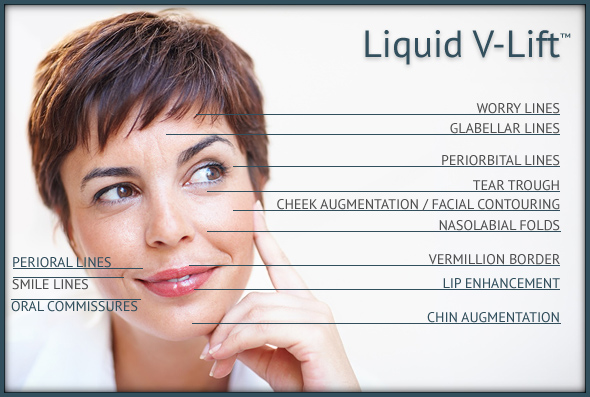
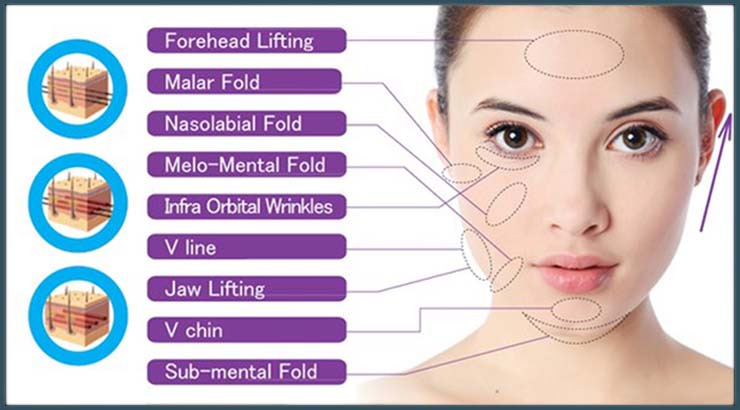
V-LIFT (FACELIFT)
ULTRA FINE THREAD LIFTING - The newest lifting technique using ultra-fine threads
| |
| |
| |
|
LASER HAIR REMOVAL
If you're not happy with shaving, tweezing, or waxing to remove unwanted hair, laser hair removal may be an option worth considering.
|
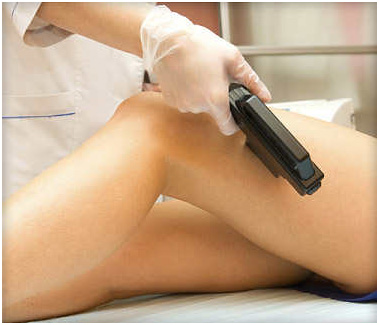
Laser hair removal is one of the most commonly done cosmetic procedures in the U.S. It beams highly concentrated light into hair follicles. Pigment in the follicles absorb the light. That destroys the hair.
|
 |
Benefits of Laser Hair Removal
|
Lasers are useful for removing unwanted hair from the face, leg, arm, underarm, bikini line, and other areas.
Benefits of laser hair removal include:
Precision. Lasers can selectively target dark, coarse hairs while leaving the surrounding skin undamaged.
Speed. Each pulse of the laser takes a fraction of a second and can treat many hairs at the same time. The laser can treat an area approximately the size of a quarter every second. Small areas such as the upper lip can be treated in less than a minute, and large areas, such as the back or legs, may take up to an hour.
Predictability. Ninety percent of patients have permanent hair loss after an average of three to five sessions.
LASER TATTOO REMOVAL
| |||||||||
Non Surgical Procedures: New at Asian Derma Clinic Skin MD & Facial Center
| Wrinkle Removal: |
Fine lines and wrinkles around the eyes and mouth during the aging process are the reason why many men and women are choosing wrinkle removal.
|
| Nose Lift: |
The patient must also be able to trust the surgeon for proper evaluation and advice.
|
| Facelift: |
If you need facial uplifting, but not necessarily a facelift, this procedure may be what you're looking for.
|
| Fuller and Thicker Lips: |
Plumps your lips right away with no painful injections.
|
| Scar Revision: |
Scar revision surgery is meant to minimize a scar so that it is more consistent with your surrounding skin tone and texture.
|
LIPOSLIM
| Face and Body Cavitation |
|
Subscribe to:
Posts (Atom)